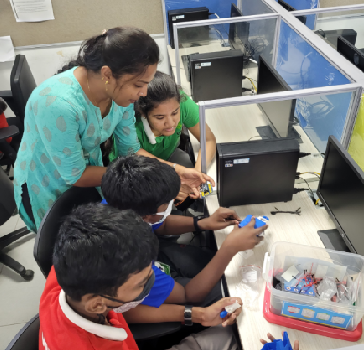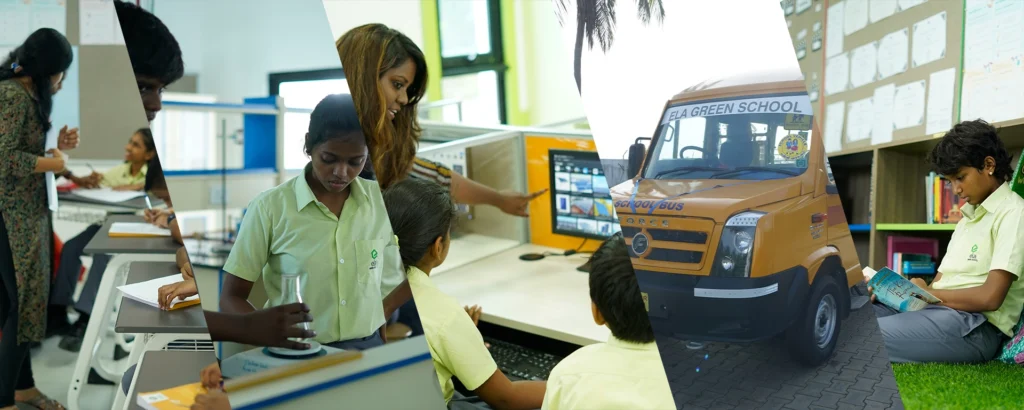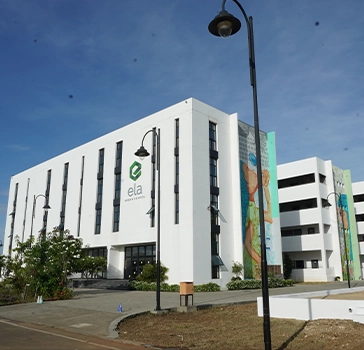
Ela Green School is a green building on a 7-acre serene campus designed to inspire students, teachers, and support staff. The campus was created with sustainability in mind, from the materials used to the way they are operated. During the construction, we preserved most of the natural environment around the campus and enforced resource-efficient practices from day one in terms of design, construction, maintenance, renovation, and deconstruction.
The structures have IGBC, USGBC, and LEED certifications. The idea from the start was to address all the concerns and keep in mind the economy, durability, and comfort, especially climate change.
We strive to maintain a green and healthy space for the children. Our classrooms have high-ceiling rooms that are spacious, well-lit, and ventilated. Due to less exposure to toxins and improved air quality, it reinforces a space for mental growth and keeps the students happier and more productive.
We also take our children outdoors and engage them in organic farming sessions through gardening and composting. By educating them about climate change, we motivate them to develop skills and practices to solve global environmental problems.
The primary years at Ela Green School is an inquiry-based educational programme for students aged 3-11 that supports them through their crucial years of learning.
The three pillars of the PYP curriculum—the learner, learning and teaching, and the learning community—all underscore the core concept of agency that runs through them all.
Through a broad and balanced curriculum that goes beyond the conventional academic approach, we build a deeper experience of the world. They are introduced to a holistic environment that tailors the learning specifically to each child’s interests. The students learn to appreciate each other’s perspectives and become inquirers, and agents of change within the school and beyond.
Our curriculum focuses on six transdisciplinary themes of global significance. It deepens their understanding by connecting abstract concepts to the real world and equips them with knowledge and skills to make a difference in their own lives and their communities.
In a nutshell, our goal is to create global citizens who accept different cultures, value diversity, and actively set an example for others.
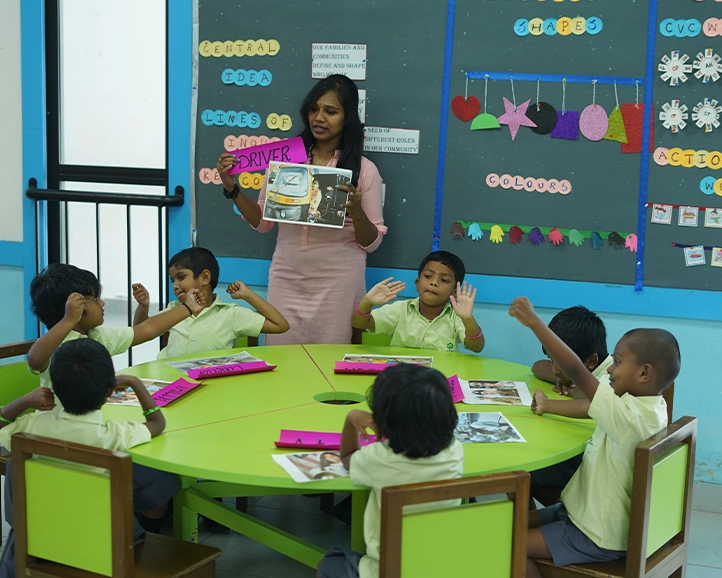
The Middle Years Programme (MYP) intends to meet the educational needs of students between the ages of 11 and 16. An engaging and comprehensive framework that is pertinent to significant real-world issues is required for developing minds at this critical stage. The curriculum gives equal importance to the eight subject groups as well as motivates the students to develop their introspective and creative thinking skills through a holistic approach.
Through the use of Global Contexts and Learner Profile Attributes, the IB MYP also focuses on tying academic curriculum and pedagogical practices to the outside world. It fosters communication, intercultural understanding, and global participation.
An essential component of the MYP is the personal project. Students advance the abilities they have acquired through the MYP by managing and directing their own inquiry. Under a teacher’s supervision, each student leads the process of developing the personal project. The purpose of assessment is to provide a summative evaluation of how well students can work independently while using the areas of interaction to guide their learning.
The IB MYP essentially prepares students for the IB Diploma Programme, which was established to provide children with a well-rounded education that paves the way to become lifelong learners.
The IB Diploma Programme (DP), which is offered to students between the ages of 16 and 19 equips them to effectively participate in a society that is rapidly changing and becoming more global as they grow in terms of their physical, mental, emotional, and ethical development.
The curriculum broadens their knowledge and comprehension through courses from six subject groups. At the same time, they acquire the abilities and a constructive learning mindset that will position them for higher education. We celebrate all cultures, modelling a celebration of different backgrounds and learning about the world, this will essentially promote empathy and equality in their everyday lives.
The students draw connections and parallels from several academic disciplines and, through the program’s distinctive Theory of Knowledge (TOK) course. They further conduct an in-depth study into a topic of interest using one or more academic disciplines for their Extended Essay (EE).
Students gain an awareness of their potential, essential skills and knowledge, and the ability to take socially responsible actions through this process. We support the overall development of children as the program provides the capacity for self-expression and interpersonal development through the CAS model – creativity, action, and service.